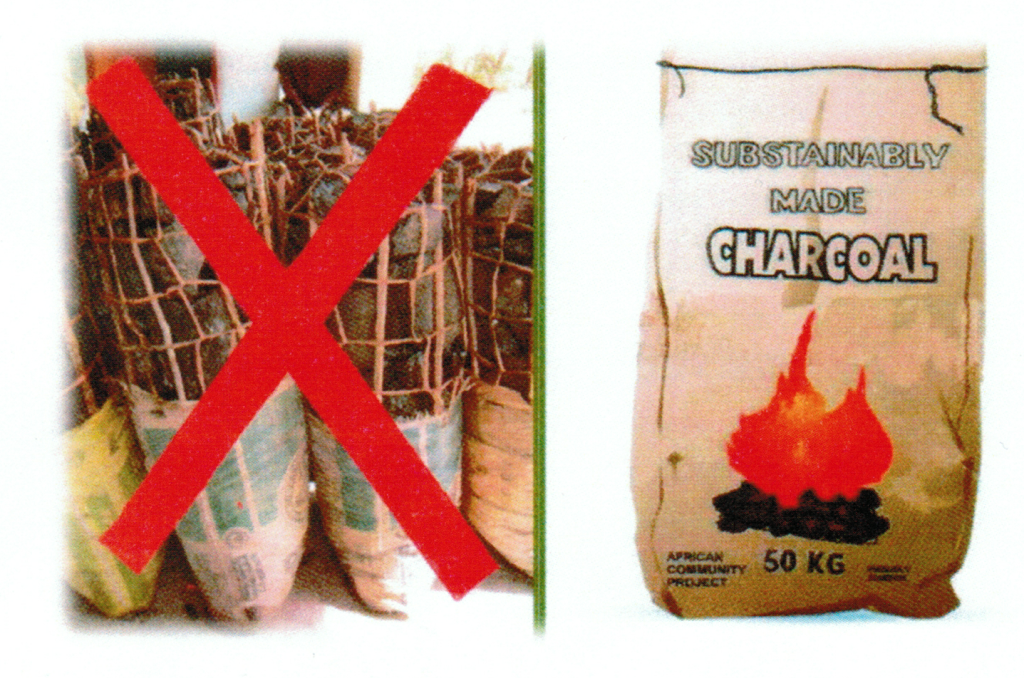
Let’s make the charcoal industry a sustainable resource with good-paying jobs

COMMUNITY FOREST MANAGEMENT

The following section is taken from the FOREST ACT of ZAMBIA

  1. (1) A community forest management group may be formed
    by a group of persons who are—
    (a) members of a village in or near a forest;
    (b) managing a forest or part of a forest; or
    (c) desirous of managing a forest or part of a forest.
    (2) A community forest management group shall be formed
    for the purpose of communal control, use and management of a
    forest.
    (3) A community forest management group shall be guided by
    the following principles:
    (a) persons living in close proximity to or deriving their
    livelihood from or having strong traditional ties to the
    forest shall be given an opportunity to join a community
    forest management group;
    (b) the purposes for which the community forest management
    group is formed shall be implemented to promote
    sustainable management of forest ecosystems and
    biological diversity;
    (c) the purposes for which the community forest management
    group is formed shall be explained to all persons wishing
    to join the community forest management group;
    (d) the management of the community forest management
    group, the management of any funds and the selection
    of the leaders of the community forest management
    group shall be based on transparency, fairness,
    impartiality and non-discrimination;
    (e) members of a community forest management group shall
    be encouraged to participate in the management of the
    community forest management group; and
    (f) the procedures for membership of the community forest
    management group or guidelines regulating the conduct
    of members of the community forest management group
    shall be based on, and conducted in accordance with,
    the principles of natural justice.
    (4) The Director may provide assistance to persons living in
    the vicinity of, or deriving their livelihood from, a forest to form a
    community forest management group to manage a forest.
  2. (1) A group of persons living in the vicinity of a forest
    may apply to the Director for recognition as a community forest
    management group with the consent of the Chief of the area in
    which the forest is located.
    (2) The Director may, within twenty-one days of receipt of
    an application under subsection (1), recognise a group of persons
    as a community forest management group if the group of persons—
    (a) is recognised within the community which is within or
    adjacent to a local forest; and
    (b) derives their livelihood from the forest.
    (3) The Director shall, in determining whether to accord
    recognition to a group of persons under this section, take into account
    the principles set out in section twenty-nine.
    (4) The Director shall, where the Director refuses to recognise
    a group of persons as a community forest management group under
    this section, notify the group of persons, in writing, within fourteen
    days from the date of such refusal and give the reasons therefor.
    (5) A group of persons which is aggrieved by the decision of
    the Director may, within thirty days from the date of receipt of the
    decision of the Director, appeal to the Minister.
    (6) A group of persons which is aggrieved by the decision of
    the Minister may, within thirty days from the date of receipt of the
    decision, appeal to the High Court.
  3. (1) A community forest management group recognised
    under section thirty may apply to the Director, in the prescribed
    manner and form, to enter into a community forestry agreement
    with the Department in respect of an area or forest for which the
    community forest management group is formed.
    (2) The Director shall, in considering an application under
    subsection (1), after consultation with the Chief and the local
    authority in respect of an area or forest for which the community
    forest management group is formed—
    (a) establish whether or not there is any other group of persons
    which intends to enter into a community forestry
    agreement or has made an application in respect of the
    same forest;
    (b) consult any other Government Ministry, department or
    body which has an interest in the matter; and
    (c) evaluate the suitability of the forest for community forestry
    management in comparison with the current or potential
    uses of the forest.
    (3) The Minister may, by statutory instrument—
    (a) prescribe the content, terms and conditions of community
    forestry agreements; and
    (b) designate an area or forest in respect of which a community
    forestry agreement is concluded.
    (4) A community resource board may apply to the Director to
    enter into a community forestry agreement in accordance with
    subsection (1), and sections thirty-two to thirty-four shall apply as
    if the community resource board were a community forest
    management group.
    (1) A community forest management group that is party
    to a community forestry agreement for a community forest shall—
    (a) protect, conserve and manage the community forest or
    part thereof pursuant to the community forestry
    agreement and the management plan for the community
    forest;
    (j) development of community forest wood and non-wood
    based industries; and
    (k) any other benefits which may be agreed upon between
    the community forest management group and the
    Director.
    (3) The Director may, in consultation with the Minister—
    (a) provide information, training advice and management and
    extension services for community forestry management;
    (b) establish and maintain nurseries and other facilities to
    provide seed and plants for community forestry
    management; and
    (c) provide material or financial assistance for community
    forestry management, including recovery from disaster
    where such assistance is not available from any other
    institution.
  4. (1) A community forest management group may, with the
    approval of the Minister, assign any or all its rights under a
    community forestry agreement to any other person or group.
    (2) A community forest management group which intends to
    assign any or all of its rights under a community forestry agreement
    shall apply to the Minister in the prescribed manner and form.
  5. (1) The Minister may, in consultation with the Director,
    terminate a community forestry agreement or withdraw a particular
    user right if—
    (a) the community forest management group breaches a term
    or condition of the community forestry agreement;
    (b) the termination is necessary for purposes of protecting
    and conserving biodiversity; or
    (c) the local community applies for the termination.
    (2) Where the Minister intends to terminate a community
    forestry agreement or withdraw a particular user right on any of
    the grounds set out in paragraph (a) or (b) of subsection (1), the
    Minister shall give the community forest management group thirty
    days, written notice to show cause why the community forestry
    agreement should not be terminated or the user rights withdrawn.
    (3) A community forest management group which is aggrieved
    by the decision of the Minister may, within thirty days of the service
    of the decision of the Minister, appeal to the High Court.
    (4) Nothing in this section shall be construed as limiting the
    grounds on which a community forestry agreement may be
    terminated.
    (5) Where a community forestry agreement is terminated, the
    Department shall resume the responsibility of protecting, conserving
    and managing the community forest affected, and any benefits
    conferred on the community forest management group shall cease.
  6. The Director shall keep or cause to be kept a register of
    all community forestry agreements entered into under this Part.

HOW IMPORTANT ARE TREES TO YOU?

The world around us is starting to show the heavy burden we are putting on it. Every day we take for granted the things provided for our use by nature. We continue to slash and burn for crop expansion, our need for fuel for cooking and heat is never ending, burning of bush and grasses has no real sense and human development continually puts pressure on the environment. Everyone is now seeing the effects of changing climates. It is getting warmer every day and even the cooler times of the year are getting colder. The rains which traditionally started around the day you celebrated your Independence now come in late December. And when it rains it is not a gentle soaking rain but in torrents that destroy homes, crops and cause havoc on nature. Our biggest ally in this fight against the ill effects of climate change is trees which we have taken for granted and that will always be there for us.

Here are some important reasons we must take better care of our trees and look after the natural environment:

Trees are the biggest suppliers of oxygen which we and our animals need to live. Trees collect carbon from the air to grow and in doing so, they release the oxygen we breathe.

Trees provide food for humans, for animals, for birds, and for insects from their flowers, fruits, nuts, bark, roots, and leaves.

*  Trees provide building material for our houses so we can have security for our families and shelter from the elements.

* Animals, birds, insects, and also call the tree their home and take shelter from the elements and from predators.

*Trees provide a living to many communities in and around the forest: sawing timber for export, doors, furniture, building poles for fences, making handles for axes and hoes, and even the last place where we find rest is a coffin made of wood.

*  Trees provide many different medicines that are cures for so many ailments we suffer. Trees have important cultural connections to most indigenous peoples on the earth.

Trees provide an anchor to the earth for the soil we cultivate; they create windbreaks so the soil is not blown away by wind or washed away by water.

*  Trees filter the air we breathe, taking away dust that causes lung diseases and eye irritations; trees filter the water we drink, making it clear and removing much bacteria that spread diseases like diarrhea.

*Trees cool the earth by slowing the evaporation of moisture and keeping the water levels in our wells from going beyond our reach.

Trees play a major role in everything we do in our daily lives. As an exercise after reading this information just make a list in your mind of all the things you and your family use trees for throughout your daily lives. And then ask yourself have I done my part to replace what I have used? Learn how to plant and look after your forest. Trees are our best friends here on earth: have you given a tree a hug today? Join us in the fight against climate change and deforestation.

Garry Brooks

by the community for the community

WAY FORWARD (part one)

The first steps in creating a sustainable community forest are:

  • for the interested citizens to form a steering committee amongst yourselves
  • the steering committee should be kept gender neutral
  • don’t make the committee too big, as you can always add to it as things progress’
  • make it quite clear to the interested members that this is totally volunteer effort
  • visit your Traditional Leaders, tell them about your plans, get them to join the cause
  • do not be judgemental to the people using and abusing the forest
  • you are doing this to find a sustainable solution to the problem of deforestation, not a confrontation with your fellow citizens
  • there may be organizations already in place in the area that are doing community forests or similar work, so ask them to join our cause
  • there is a form page above where you can download templates of forms for keeping records of meetings attendance and members’ names

WEBSITE LAUNCH

I am hoping that this simple website will help us all get to know each other better, work together and start on the road to stopping the mismanagement of your forests. And solving any problems we may have in our quest of making the fuelwood industry of Zambia sustainable.

It will take a while to get to where I want it……so please be patient. There is an old saying….’you can’t teach an old dog new tricks’. This new technology is all so puzzling to me.

Progress

My most sincere greetings to other concerned citizens
I am very pleased with the hundreds of citizens across Zambia that has expressed their concern for their natural environment. The change of attitude of the public will take some time. Your Government has a chance to be part of this solution, but so far they have failed to reply to my offer to even read my concept paper. We must start somewhere or it will be too late. Desertification of Zambia will continue until there will be no turning around.
I will share with you the first step of correcting this deforestation problem. The entire community must take back their forest lands from the takers. This can be accomplished by creating community forests and controlling what is being harvested or destroyed. Remember, human rights are being pushed to the limit on what is going on. Form a steering committee from the concerned citizens in your community. Set boundaries for your forest. Tell the users and abusers that they must now play by new rules. Rules that include each and every person in the community as well as the other creatures who share this world.
Once your community forest has a steering committee is in place, I will show you how to make your forest sustainable and profitable. This concept will only work if you will do this voluntarily at this point. I have volunteered my time since 2002 in Zambia, working with communities for a better environment. I have no problem continuing this giving.
Please contact me if you need advice or moral support.
Garry Brooks
World Citizen
africancommunityproject@gmail.com